🧠 Optical Illusions Explain Why AI Hallucinates
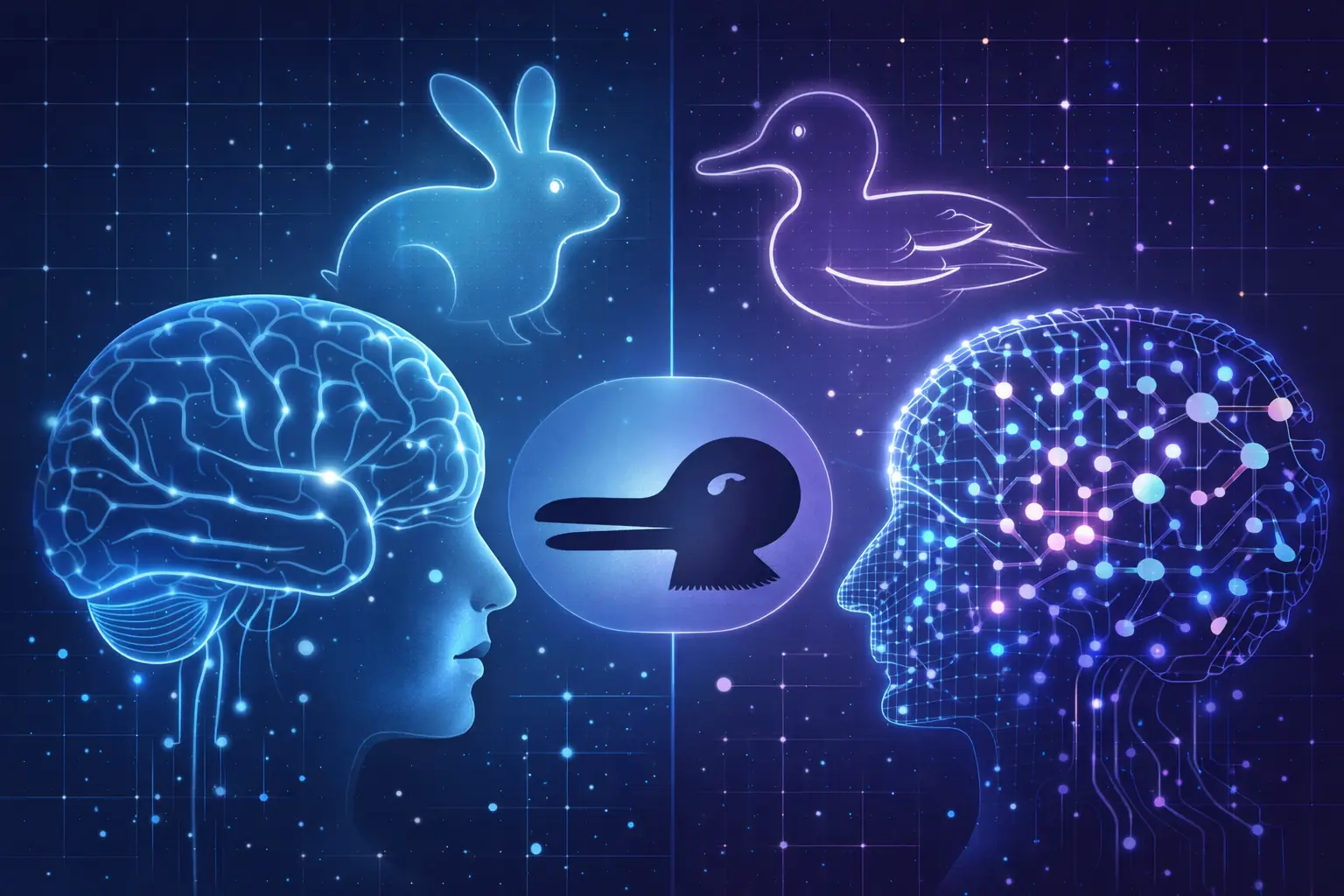
Optical illusions reveal something important about intelligence — both human and artificial.
TLDR: AI hallucinations happen for the same reason
optical illusions fool humans. Intelligence systems rely on pattern
recognition and inference, not direct knowledge of reality.
Humans See Things That Aren’t There
Optical illusions are fascinating because they reveal a weakness in how our brains process information. Consider the classic illusions:
- Two lines that appear different lengths but are identical
- Static images that appear to move
- Shapes that seem three-dimensional but are actually flat
Your brain confidently perceives something that does not exist. Even after you learn the truth, the illusion still works. Why? Because your brain is not directly seeing reality. It is interpreting patterns.
The Brain Is a Prediction Machine
Your brain constantly asks questions like:
- What object is this likely to be?
- What shape fits the pattern I see?
- What interpretation best matches past experience?
AI Models Work the Same Way
Large language models and image recognition systems operate using a similar principle. They do not actually “know” facts in the way humans imagine.Instead they predict:
- What word is most likely next
- What pattern most resembles a known object
- What interpretation best fits the training data
How Image Recognition Can Be Fooled
Researchers have discovered that tiny changes to images can fool AI vision systems. A famous example: A few pixels of noise can cause a neural network to classify:- A turtle as a rifle
- A panda as a gibbon
- A stop sign as a speed limit sign
Hallucinations Are Not Bugs — They’re a Property
A common misconception is that hallucinations are a defect that can be completely eliminated. They cannot. They are a natural consequence of how prediction-based intelligence works. The same pattern inference that allows AI to:- Summarize documents
- Write software
- Reason through problems
What This Means for the Future of AI
Understanding hallucinations through the lens of optical illusions leads to a more realistic expectation. AI will not become perfect truth machines.Instead, the future likely looks like:
- AI systems that check themselves against external data
- Architectures combining probabilistic reasoning with verification
- Humans acting as high-level validators